Out with the Old, In with the New!
Well, its official… 2026 is now in full swing!
Our incredible artists for 2026 have started rehearsals and are gearing up for another amazing year of inspiring students across Australia and New Zealand, sharing a love of poetry, language and performance.
Before we hand over the reins, Bayley, Keiden and Ellen (Team Raven 2025) wanted to share some of their favourite poems with you as they close the chapter on last year’s tour and welcome the new actors for the year ahead!
Bayley’s Pick: A Love So Perfect It Can’t Exist

The Definition of Love by Andrew Marvell (1681)
“… As lines, so loves oblique may well
Themselves in every angle greet;
But ours so truly parallel,
Though infinite, can never meet.
Therefore the love which us doth bind,
But Fate so enviously debars,
Is the conjunction of the mind,
And opposition of the stars.”
Andrew Marvell is classed as one of the ‘metaphysical poets’. This group of poets can be characterised by their intellectual examination of illusive subjects like love, abstract imagery that is often scientific or technical, and a conversational tone that can be quite direct and even argumentative.
‘The Definition of Love’ has a philosophical and scientific approach to “defining” love. It uses imagery in ways I had never come across before until I read it, and I found that thrilling.
My favourite image comes in the seventh stanza. It describes two lovers as two parallel lines that will always exist infinitely alongside one another, but will never intersect. A kind of love that is so pure that it’s existence is mathematically impossible. It’s such a brilliantly simple yet sophisticated image that is completely heartbreaking.
I really admire poets who nail the elegance of simplicity, I always find it the most provocative.
If you want to do some brain gymnastics, I seriously cannot recommend any work from the metaphysicals enough. They are always a beautiful and emotional read. – Bayley
Keiden’s Pick: Crafted, Colourful, Controversial
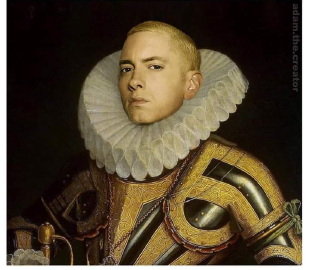
Renegade by Jay-Z ft. Eminem (2001)
“See, I’m a poet to some, a regular modern-day Shakespeare
Jesus Christ, the king of these Latter-day
Saints here
To shatter the picture in which of that as
they paint me as
A monger of hate, satanist, scatter-brained
atheist
But that ain’t the case, see, it’s a matter of
taste
We as a people decide if Shady’s as bad as they say he is”
In the world of pop culture, hip hop, and poetry, Eminem is someone that will always be discussed with much derision, devotion and/or division (see, I can do it too). He’s controversial, he’s unapologetic and his usage of certain words is hurtful and crude. But one thing that is uncontested is Em’s mastery of syllables and rhyme, in particular, assonance.
A fun exercise is highlighting every example of assonance and consonance in any of Em’s songs and using different colours for each vowel; be amazed at the mosaic of colours that you’ll find. THAT’S what I love about Eminem; on a purely compositional level, his language is so colourful, but it can only be heard and truly appreciated when vocalised.
Whilst this excerpt from ‘Renegade’ is not one of Em’s best when it comes to imagery (‘Lose Yourself’) or storytelling (‘Stan’), it does highlight another one of his game-changing characteristics as a poet; his unapologetic and honest writing voice. He challenges the listener’s prejudice against his controversial public image head-on. – Keiden aka Lil Bao
Ellen’s Pick: The Song after the Storm
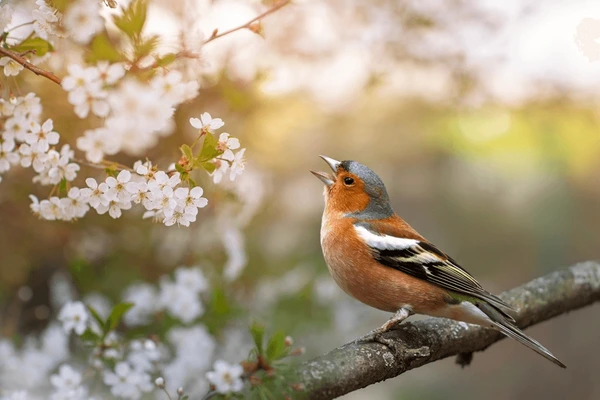
Everyone Sang by Siegfried Sassoon (1919)
“Everyone suddenly burst out singing;
And I was filled with such delight
As prisoned birds must find in freedom,
Winging wildly across the white
Orchards and dark-green fields; on – on – and out of sight.
Everyone’s voice was suddenly lifted;
And beauty came like the setting sun:
My heart was shaken with tears; and horror
Drifted away … O, but Everyone
Was a bird; and the song was wordless; the singing will never be done.”
To be honest, my favourite poem changes daily, but this is one I always come back to. During the tour I made a real effort to buy poetry books in every new place I could. An honourable mention, and probably my favourite anthology to date, is ‘Tigers at Awhitu’ by Sarah Broom. I picked up this beautiful book from a used bookshop in Tauranga, New Zealand, which was one of my favourite places from the trip!
However, in a bookshop in Hobart, I stumbled upon ‘The Poetry Pharmacy: Tried-and-True Prescriptions for the Heart, Mind and Soul’ by William Sieghart. It’s essentially a poetry anthology designed to offer emotional solace and reflection (think literary “medicine”).
In it, I came across this Sassoon classic, written at the end of WWI. Seighart prescribed it for “joy and release after a long period of suffering or constraint”. It captures such a vivid picture of rejoicing at the end of horror and bloodshed, expressing that overwhelming rush of freedom and relief.
The reason I love it so much is because it reminds me that even in the darkest times, joy does return. It encourages me to stay hopeful when things feel hard. It reminds me how poetry, singing and art in general can always offer comfort and a way to express what’s inside. I’m drawn to poetry in particular because it captures feeling in a way ordinary conversation often can’t.
It shows me that we are truly never alone in our emotions. Someone, somewhere in the world has felt the same despair, elation, anger, joy or love, and Sassoon has captured that perfectly in a poem. Reading those words makes you feel understood and instantly connected. A reminder that you are not alone after all. And of course, the same can be said for joyful poems too! – Ellen
Ultimately, poetry serves as a reminder that emotions, big or small, are shared, understood and celebrated by everyone. And that connection is a beautiful, powerful kind of healing in itself.
– Team Raven 2025 signing off